So you've booked a photoshoot, Now what?
Whether it's a family portrait session, professional headshots, or a personal branding shoot, a little preparation goes a long way. The difference between photos you'll treasure forever and ones you forget about often comes down to what you do *before* you ever step in front of the camera.
Here's everything you need to know to show up confident, comfortable, and camera-ready.
---
Start Preparing at Least a Week Out
Good photoshoot prep doesn't happen the night before. Give yourself at least 7–10 days to get organized so you're not scrambling last minute.
A week before:
- Confirm your shoot details like location, time, and any shot list or mood board you've discussed with your photographer (Your photographer should confirm this with you)
- Pull together your outfit options and try them all on
- Steam or dry clean anything that needs it (wrinkles show up *a lot* on camera)
- Schedule any hair or nail appointments
The night before:
- Lay out your complete look, including shoes and accessories
- Prep a small touch-up bag: oil blotting sheets, a small hairbrush, clear lip gloss, and safety pins
- Get a full night of sleep! Puffy eyes and tired skin are hard to edit out
The morning of:
- Drink plenty of water and eat a light meal
- Keep makeup and hair simple if you're doing your own. less is usually more on camera
- Arrive 10–15 minutes early so you're not rushed
---
What to Wear: The Golden Rules
Choosing your outfit is one of the most important decisions you'll make for your shoot. Here's how to get it right.
1. Wear What Makes You Feel Like YOU!
The best outfit is one you feel confident and comfortable in. If you'd never wear a blazer in real life, don't force it for photos, that discomfort reads on camera. Choose pieces that reflect your personality and the story you want your images to tell.
2. Stick to a Cohesive Color Palette
You don't need to match perfectly, but you do want to coordinate. A palette of two to four complementary colors keeps things visually harmonious. Earth tones (cream, sage, rust, camel) work beautifully outdoors. Soft neutrals are flattering in studio settings. For family or group sessions, have everyone coordinate rather than match identically.
Colors that photograph well:
- Dusty blues, muted greens, and soft magentas
- Warm neutrals - ivory, taupe, camel, warm white
- Rich jewel tones like emerald, burgundy, or deep navy
Colors to use with caution:
- Bright neon shades (can cast color onto your skin)
- Stark white against very pale skin (can wash you out)
- Very dark black without contrast pieces
3. Choose Textures Over Busy Prints
Texture adds visual interest without the distraction of a loud pattern. Think linen, chunky knit, velvet, denim, or lace. Solid colors and subtle textures almost always photograph better than large logos, graphic tees, or small busy prints (especially tiny stripes or checks, which can create a moiré effect on camera).
4. Dress for the Location
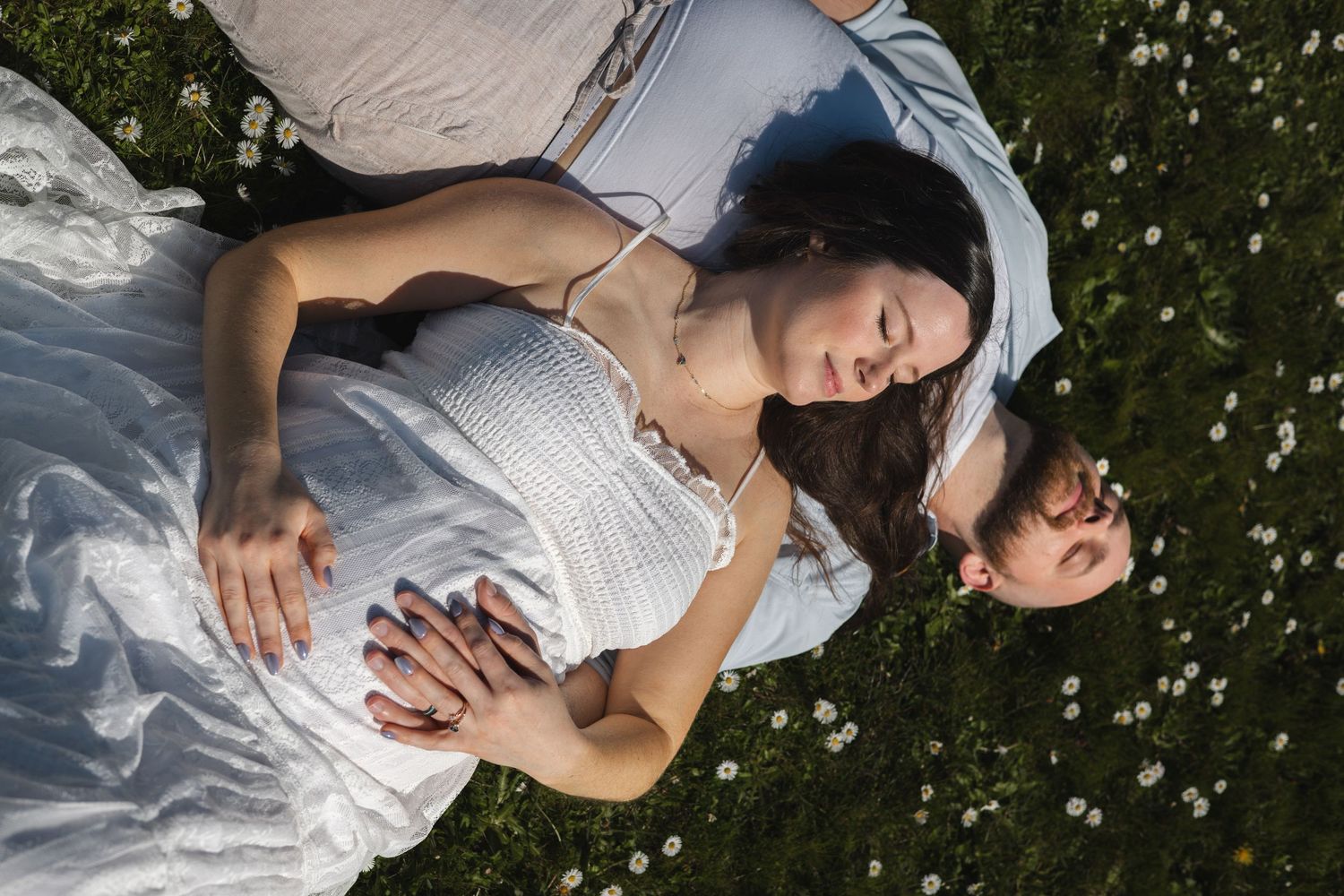
Your outfit should feel natural in the setting. A flowy maxi dress makes sense in a golden-hour field; it looks a little out of place in a sleek urban studio. Consider the backdrop, the light, and the overall vibe of the shoot when making your selections.
5. Think About Fit Over Everything Else
A well-fitting outfit in a simple color will always outperform an expensive, ill-fitting one. Clothes that pull, bunch, or gap are distracting. If something doesn't fit quite right, have it tailored or choose something else.
---
Outfit Ideas by Shoot Type
Professional Headshots: A fitted blazer or structured top in a solid, confident color (navy, charcoal, burgundy). Avoid busy patterns and overly casual pieces.
Personal Branding: 2–3 outfit changes that reflect different facets of your brand - one polished, one relaxed, one that shows your personality.
Family Portraits: Coordinate in a shared color palette (not matching outfits). Mix textures - denim with linen, stripes with solids - and make sure kids are comfortable enough to move freely.
Lifestyle / Editorial: Have fun here. Layer pieces, mix prints intentionally, and don't be afraid of bolder choices. This is the shoot to take risks.
Maternity: Flowy dresses in soft tones, wrap dresses, and form-fitting pieces that celebrate your bump. Avoid boxy silhouettes that obscure your shape.
---
A Few More Tips Before You Go
Bring options: Pack 1–2 backup outfits even if you've chosen your main look. Light conditions and locations can change the vibe, and it's always good to have choices.
Skip the brand new shoes: Broken-in shoes mean no blisters and no stiff, awkward posture.
Go easy on the perfume: If you're working in close proximity to your photographer or other people in the shoot, strong scents can be distracting.
Communicate with your photographer: Share your outfit ideas ahead of time, a good photographer will let you know if something might be a problem for the specific light or location.
---
The Bottom Line
Preparing for a photoshoot is about removing friction so you can show up and *just be yourself*. When your outfit fits, your skin is rested, and you know what to expect, you can relax, and relaxed, confident people always photograph beautifully.
Now go have an amazing shoot. You've got this.